The Prize Was Always Called a Purse
How golf named its biggest reward after women — and spent a century making sure they would not share it equally.
Angeli Gianchandani traces the word "purse" back through history to the modern gender pay gap in golf and tennis, and asks why the sport named its biggest prize after the one thing it never let women share equally.
The Edge | By Angeli Gianchandani | Cultural Intelligence • June 30, 2026 • 5 min read
The Definition
The purse is at least 5,000 years old. The oldest natural mummy on record, Ötzi the Iceman, was found with a pouch sewn to his belt, dating to 3300 BC. The ancient Greeks carried leather coin bags they called byrsa. That word is where the English word purse comes from.
For most of human history, men and women both carried them. Then fashion changed. Pockets were sewn into men's clothing. Women's clothing was often not made with pockets. Women kept the purse.
Women kept what men left behind and built one of the world's most valuable luxury accessory markets around it. The global luxury handbag market exceeds $25 billion, per Precedence Research. Women drive 89 percent of demand. The most coveted object in that market, the Hermes Birkin, has a years-long waitlist and is named after a woman.
Few women are seen in public social settings without a purse.
In professional golf, the prize pool is called a purse.
The men who named it had already given the real one up. They traded it for a pocket. Then they named their prize after it. Then they spent nearly a century making sure women would not share equally in it.
The Prize They Named After Her
The PGA of America was founded in 1916. The LPGA was not founded until 1950. By the time women had a professional tour, the men had a twenty-year head start on purses, media rights, and the prestige that comes with being the only game in town.
Augusta National opened in 1932. It did not admit a female member until 2012. Even in this century, women faced opposition. When activist Martha Burk pressured the club to change in 2002, chairman Hootie Johnson said women might one day be admitted, but "not at the point of a bayonet." The club dropped commercial sponsorship for two years of Masters broadcasts rather than yield.
What finally moved them was not principle. It was IBM. When IBM named Virginia Rometty CEO in 2011, the club faced a choice: break its eighty-year policy or break with a major sponsor. They admitted Condoleezza Rice and Darla Moore in 2012.
They did not open the door because it was right. They opened it because the embarrassment became more expensive than the policy.
She Built What the Tour Would Not
Membership is not the only remaining disparity. In the professional circuit, there is still a vast gap. In 2025, the PGA Tour paid out $565 million across its season. The LPGA paid out $133 million. The top LPGA earner, Jeeno Thitikul, made $7.6 million, a sum that would have placed her 20th on the PGA Tour money list. She led her entire tour. She would have been a footnote on theirs.
Annika Sorenstam won 10 majors and 72 LPGA titles. She is the most decorated female golfer in history. She never competed for a Masters purse because there is no women's Masters. The men's and women's majors are not the same tournament. They are parallel systems with a wall between them.
Sorenstam did not wait for the tour to close that gap. She built the ANNIKA Foundation with junior clinics, college development programs, and the ANNIKA 20 initiative to open the door for the next generation of women ready to compete at the highest level.
She did not ask permission. She built the pathway herself.
She Made the Math Work First
Tennis had its own version of this wall. In 1972, Billie Jean King won the US Open and earned $10,000. The men's champion earned $25,000. Same tournament. Same courts. Same title.
King threatened to boycott. She found a sponsor, Ban deodorant, and covered the difference herself. In 1973, both champions earned $25,000. The US Open became the first major sporting event in history to offer equal prize money.
Fifty years later, the Slams are equal. Everything outside them is not. At the 2025 Cincinnati Open, men took home $9.2 million, women $5.2 million, the same tournament, a 77 percent gap, per Sportico. That gap is not a rounding error. It is a policy.
Serena Williams won 23 Grand Slams. She broke every record the sport had. The system found other ways to push back. Williams wore compression garments after suffering a pulmonary embolism during childbirth. After a three-hour match, compression sleeves and tights are standard recovery. After childbirth complications that nearly killed her, the same garment was a dress code violation. She said it herself: 'I needed to have full compression going on because of my blood.' The French Tennis Federation banned the garment anyway. One must respect the game, the president said.
The rule did not exist before she wore the garment. He wrote it after.
She was the game.
Williams did not wait for the tour to catch up either. She built Serena Ventures — $111 million raised, 80 percent invested in women and diverse founders, 16 unicorns. "When you invest in women, the returns are there," she said. "It's not charity. It's smart business."
By Design
Three women. Three sports. One move.
King found a sponsor. Sorenstam built a foundation. Williams built a fund. None of them waited for the system to feel ready. All of them changed the math and presented the system with a fact.
The sport named its prize after the purse. Women built the economy around what men left behind. And when the system kept moving the rules on the purse, on entry fees, on what a body returning from childbirth is allowed to wear, these women picked up the purse and built something new with it.
These women are carrying the purse. The men who named the prize after it still decide who gets paid. Equality was never a gift. It was always owed.
Copy Editor
Enid Burns is a Detroit-based journalist and editor. Her work has appeared in CNN, the New York Post, and CNET. She serves as copy editor for The Edge, reviewing each article before publication.
Sources
Historical references on the origins of the purse and the etymology of byrsa. Precedence Research luxury handbag market estimates. Grand View Research consumer demand data for handbags. PGA of America founding records, April 10, 1916, History.com. LPGA founding records. Augusta National, IBM, and Masters Tournament historical records including Martha Burk 2002 correspondence and Hootie Johnson public statement. Virginia Rometty IBM CEO appointment 2011, Augusta National membership records. 1973 US Open equal prize money funded by Ban deodorant, USOpen.org and History.com. Billie Jean King 1972 and 1973 US Open prize money records, USTA official records. 2025 US Open total purse $90 million, Sportico and USTA official records. 2025 Cincinnati Open ATP $9.2 million and WTA $5.2 million, Sportico and ATP and WTA official records. Indian Wells 2025 prize money disparity, first since 2009, Sportico and Perfect Tennis reporting. French Tennis Federation catsuit ban, Bernard Giudicelli statement, Tennis Magazine August 2018, NPR and CNN. Serena Williams pulmonary embolism and compression garment statement, CNN 2024. Serena Ventures portfolio and investment thesis, serenaventures.com and Fortune 2025. ANNIKA Foundation programs and ANNIKA 20 qualifying fees, annikafoundation.org and Southern Company press release. PGA Tour 2025 total season purse and LPGA Tour 2025 total season purse, Sportico and Statista. Jeeno Thitikul 2025 LPGA earnings, LPGA official records.
About The Edge
The Edge examines how culture, business, leadership, sport, and global systems shape markets, institutions, and the decisions leaders make. It features original essays and analysis by Angeli Gianchandani.
About the Author
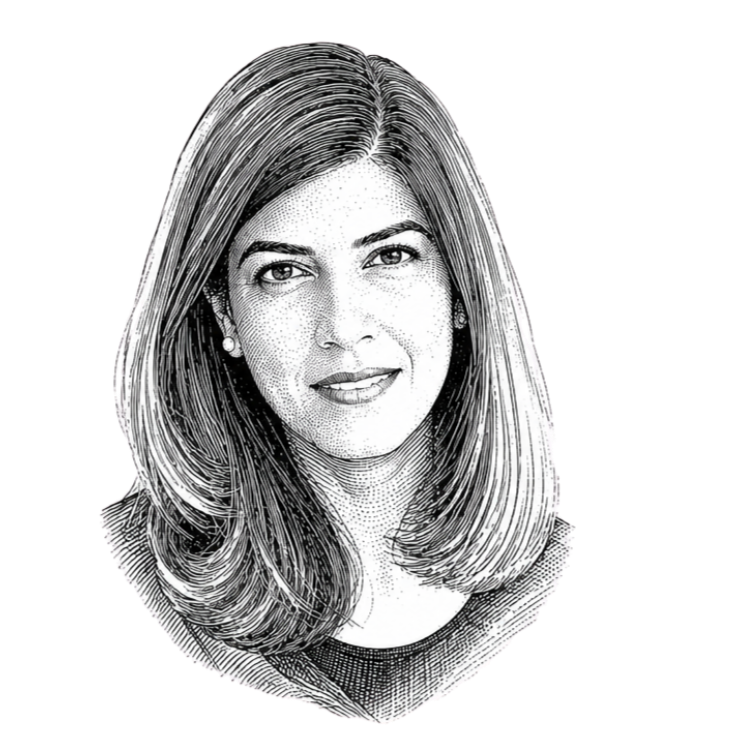
Angeli Gianchandani is a global brand strategist, cultural intelligence practitioner, and educator. She is the creator of the CULTURE Framework™, and advises leaders on commercial growth, brand value, and the decisions connecting current performance to long-term opportunity. She is Adjunct Faculty at NYU School of Professional Studies, Visiting Lecturer at African Leadership University, and holds a master's degree from The Fletcher School at Tufts University. Read more at mobilitygirl.com/theedge and Authory.