How enduring brands turn intuition into something others can carry
Angeli Gianchandani, who worked inside Ralph Lauren's design studio in the late 1990s, examines how a founder's instinct becomes culture, and why the person who translates that instinct may matter as much as the vision itself.
The Edge | By Angeli Gianchandani · October 29, 2026 · 4 min
Taste Cannot Be Written Down

Courtesy of Ralph Lauren
Every fall, Ralph Lauren begins its turn toward the holidays. Tweed returns, the palette warms, and the Rhinelander mansion on Madison Avenue starts to dress for the season. Each year the look feels new, sharper and more modern than before, yet more than five decades in, it stands entirely on its own. Other great houses carry their founders’ cultures. This one carries Ralph’s.
Founders get the credit for vision, and they deserve it, but a vision only endures when someone else can use it. Enduring brands scale through a translator, someone who understands the founder well enough to make decisions true to their intent, even in their absence. They need this person because you can't hand a sensibility to a company in a style guide. Rules can be written down, while taste has to be learned from someone who has it.
The Person Who Understands What You Mean
Ralph Lauren has a DNA. This DNA is sensibility and authenticity, and it starts with the man himself. At Ralph Lauren, creativity is a form of leadership. The company packages it and translates it into product. What a customer takes home is a feeling and a way of life as much as a jacket.
I sat in the room with Ralph, and his presence was powerful. He had a charm and a sophistication that were best in class, calm and unhurried, yet completely firm about what he was looking for.
His standards often arrived without words. One afternoon, as the team prepared for an internal walkthrough, Ralph walked onto the design floor unannounced, with no executives, only a friend beside him. No one panicked or asked what to do. The team stepped back and let the story breathe, because they could read his cues and his rhythm in ways they had learned by working beside him.
A vision delivered that way still has to travel, reaching people who were never in that room. For five decades, Buffy Birrittella carried that vision more than anyone else at the company.
I joined in the late 1990s, when the company was nearing thirty years old. I worked daily with John Varvatos and other key designers, not directly with Buffy, yet everyone on the floor knew her role. She guided the work and kept it true to Ralph. I did not have a word for it then, but looking back, the word is translator.
Her role was creative at its core. She was the link between the creative process in the studio and every touchpoint that brought it to life. She went with Ralph to fabric appointments in Europe, started the advertising division that gave his world its image, shaped the launch of the home collection, and had a hand in turning the Rhinelander mansion into the first flagship, all without making herself the story. She could make the classic feel modern while keeping it rooted in tradition, because a great translator knows what can change and what cannot.
From Instinct to Code
Every translator does three things: interpret the intention, edit what does not belong, and codify what does.
I watched that process every season. We built a rig, a display of mannequins, product, visuals, and props arranged into a scene layered with texture, color, silhouette, and even scent, much like a store window, so the lifestyle behind the collection could come together in one place. We hunted for vintage pieces in thrift shops, Salvation Army stores, and flea markets, coming back with old polo shirts, sweatshirts, and washed-out jeans. Those worn pieces gave the scene a lived-in history. Every detail was chosen with intent, down to the fade of a pair of jeans. That attention to detail is what sets Ralph Lauren apart: it makes the product authentic and the experience memorable.
When a founder says, "That does not feel right," the translator understands why, and over time the organization understands why too. Taste becomes standards, standards become behavior, and behavior becomes culture.
The best translators work in both directions. They carry the founder's intent into the organization, and they carry the organization's ideas back in a form the founder understands, making the vision legible both ways. Some of the translation never makes it onto paper, so the translator models that part, decision by decision, until others can see it.
When Judgment Becomes Culture
Leaders who never name someone to this role leave their culture dependent on one person. No leader can make every decision, especially as a company grows, so the real test of a culture is whether people can make the call the leader would make. That depends on how a leader builds the team, and whether they are willing to trust it. Ralph trusted Buffy with his vision. Buffy elevated it, then carried the responsibility of making sure the teams around her did the same. That chain of trust was the brand’s real advantage.
Delegating execution is one thing. Delegating judgment is something else entirely. It requires a level of trust most leaders find uncomfortable, along with someone who has absorbed the intent so fully that they can protect it.
From the design studio, that judgment moved outward category by category. Today it meets the customer at every level, in places no founder could personally oversee: a cup of Ralph’s Coffee, a store, the ball crews at the US Open. Each is a touchpoint, and together they deliver one holistic feeling that could only be Ralph.
By the time Buffy retired in 2021, much of what she had interpreted was embedded in the organization, which is a translator's final achievement.
Walk past the Rhinelander mansion this December, and it is evidence of a sensibility carried through every department and across every decade. I see it in myself, too. You learn the ethos when you work at Ralph Lauren: the attention to detail, the feel of a fabric, the coordination and the layering, the ability to bring the old and the new together. It stays with you long after you leave.
The visionary creates the instinct, and the translator makes it transferable. Culture is what remains when neither has to be in the room.
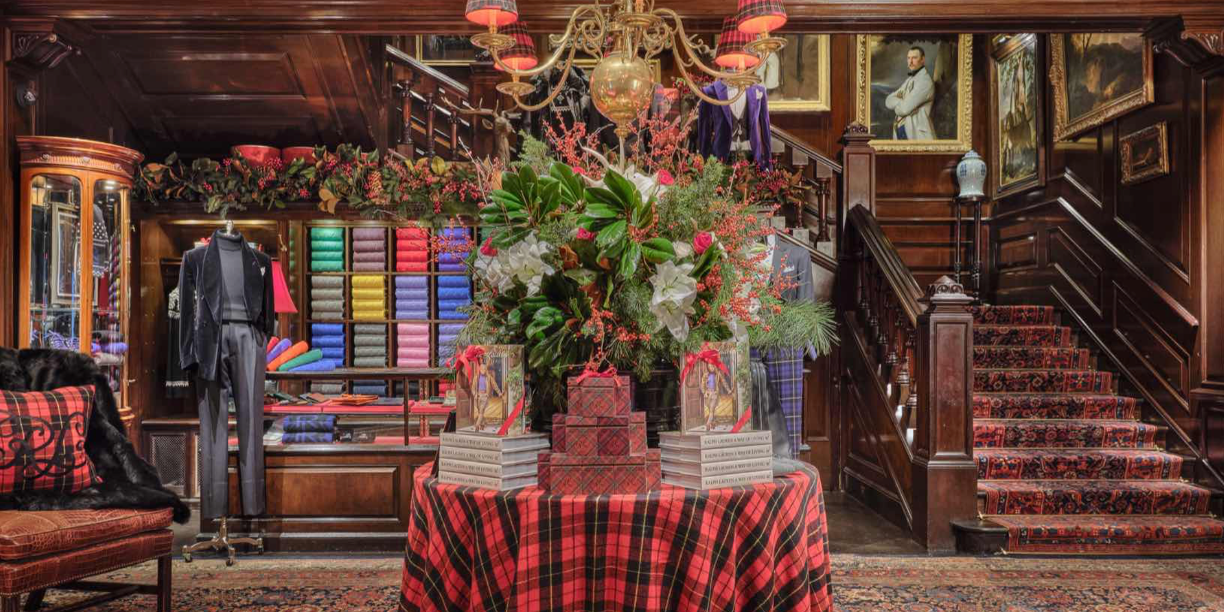
Courtesy of Ralph Lauren
About The Edge
The Edge examines how culture, business, leadership, sport, and global systems shape markets, institutions, and leaders' decisions. It features original essays and analysis by Angeli Gianchandani.
Copy Editor
Enid Burns is a Detroit-based journalist and editor. Her work has appeared in CNN, the New York Post, and CNET. She serves as copy editor for The Edge, reviewing each article before publication.

About the Author
Angeli Gianchandani is a global brand strategist, cultural intelligence practitioner, and educator. She is the creator of the CULTURE Framework™, and advises leaders on commercial growth, brand value, and the decisions connecting current performance to long-term opportunity. She is Adjunct Faculty at NYU School of Professional Studies, Visiting Lecturer at African Leadership University, and holds a master's degree from Tufts University’s Fletcher School. Read more at mobilitygirl.com/theedge and Authory.